Let's start with the honest part
Antidepressants saved your life. And they flattened your sex drive. Both things are true, and neither cancels out the other. Now that your desire is returning, you might feel relief mixed with something weirder: uncertainty. Your body is waking up, but you're not quite sure how to meet it halfway.
That's not weakness or overthinking. That's a real transition that benefits from a real plan.
Why antidepressants numb you (and why that numbness can linger)
Most SSRIs and SNRIs work by boosting serotonin. They're incredibly effective for depression and anxiety. The sexual side effect is real and surprisingly common. About 40 to 60 percent of people on these medications experience some form of sexual dysfunction: lower libido, difficulty with arousal, or anorgasmia (trouble reaching orgasm).
Here's the weird part. Even after you've reduced the dose or switched medications, sensation doesn't always bounce back immediately. Your brain and body spent months in a dampened state. Rewiring that takes time and, honestly, a little gentle coaching.
The first thing to know about reconnecting
Your capacity for pleasure didn't disappear. It went quiet. There's a difference. The neural pathways are still there. The clitoral nerve endings are still there. Your ability to orgasm is still there. What's missing is the signal, the spark, the permission your body gives itself to want something again.
Many people I work with describe this as feeling like they're meeting their body as an acquaintance rather than an old friend. You know it's you. It just feels unfamiliar. That's completely normal, and it passes faster than you'd think with a little focused attention.
Why lemon clitoral vibrators work particularly well during this window
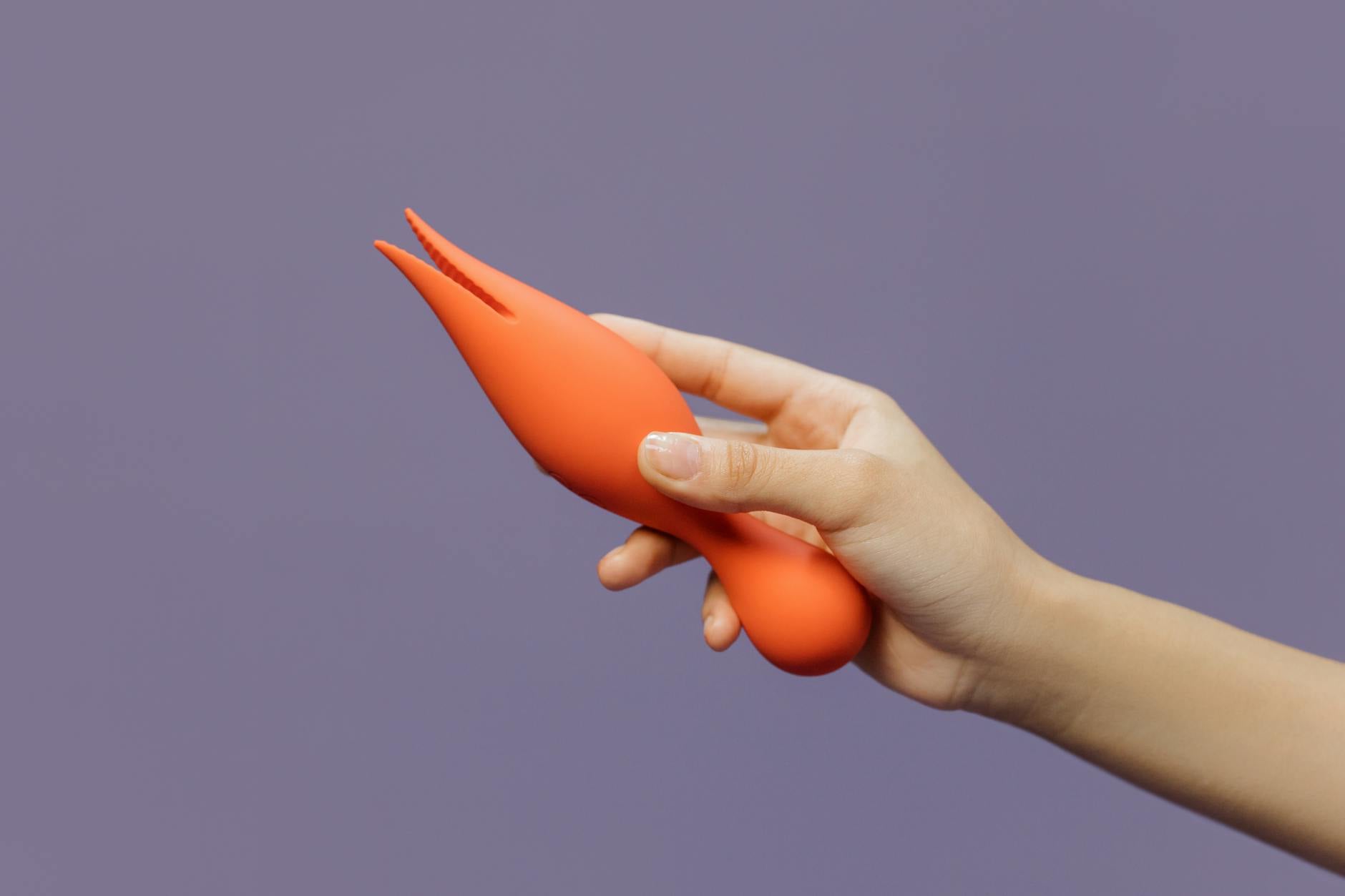
When you're rebuilding sensation after numbness, intensity matters less than the type of stimulation. Lemon vibrators, and suction-based toys in general, work differently than traditional vibrators. Instead of delivering vibration through direct contact, they create a gentle suction that stimulates the entire clitoral head and the surrounding tissue.
For people coming back from antidepressant-induced numbness, this matters because:
Suction reaches deeper nerves. Direct vibration can feel hollow if your sensation is still rebuilding. Suction engages the entire clitoral structure, not just surface skin. That fuller engagement often feels more complete to returning bodies.
It's gentler without being timid. You can start on a lower setting and gradually work up as sensation returns. You're never forcing yourself into intensity you're not ready for, but you're also not tiptoeing around your own body.
The sensation is novel. If traditional vibrators felt numb or distant during the worst of your medication side effects, trying something with a completely different mechanism can bypass that learned numbness. Your nervous system recognizes this as something new, not something that failed you before.
How to start again: the practical roadmap
Week 1: Solo exploration without pressure
Start alone. Not because partnered pleasure is off-limits, but because you need to relearn your own body without performance anxiety or anyone else's timeline.
Begin with a lemon clitoral vibrator on the lowest setting. Spend 20 minutes just holding it, turning it on and off, noticing where sensation feels strongest. Don't aim for orgasm. Seriously. The goal is information, not outcome.
Many people report that the first sensation they feel is curiosity followed by a tingle somewhere unexpected. Your clitoris doesn't live in a vacuum. It connects to your vulva, your pelvic floor, even your lower abdomen. Pay attention to where the sensation travels.
Week 2: Building familiarity
Now you're moving the lemon vibrator slightly, exploring what different positions feel like. Angle it. Move it side to side. Let your body guide the experimentation.
If orgasm happens, great. If it doesn't, that's also fine. Some people find their orgasm capacity returns quickly. Others need a few more weeks for that final threshold to lower. Both timelines are normal.
If you're feeling resistance or numbness, don't push harder. That's the opposite of what helps. Instead, pause. Take a breath. Your nervous system is learning to trust pleasure again. Forcing it backward.
Week 3 onward: Integration and adjustment
By now, you likely have a sense of what works. Maybe it's a specific vibration pattern. Maybe it's the angle. Maybe it's the fact that you feel less self-conscious now that sensation is actually returning.
If you're partnered, this is where you might begin exploring together. But before that conversation, get clear on your own experience first. "I'm feeling sensation again in my clitoris, and suction feels better than vibration" is useful information to share. "Something is working, but I'm not quite sure what" is not yet ready for collaboration.
What to expect in your nervous system (and what's not a problem)
As sensation returns, some people feel hypersensitivity at first. Your clitoris might feel tender or almost too intense at settings you'll later find comfortable. This isn't a sign something is wrong. Your nervous system is turning the volume back up after months of static. It sometimes overshoots before settling into the right level.
Your orgasms might feel different than they did before antidepressants. Maybe shallower or less intense. Maybe stronger. Maybe the timing is different. You're not broken. Your body is simply reorienting to pleasure after a long pause. Give yourself permission to be curious instead of disappointed.
Some people find their desire returns all at once. Others notice it creeping back gradually. A few find they need to switch medications or adjust doses to get full sensation back. If you're months into this process and sensation is still distant, that's a conversation to have with your prescriber. Sometimes a small tweak to your medication or a dose adjustment makes a tremendous difference.
When to bring your partner in (if you have one)
Wait until you feel comfortable with your own body first. Not comfortable as in "fully repaired." Comfortable as in "I've rediscovered what pleasure feels like, and I'd like to share that."
Then have a conversation that separates two topics. First: "My body is coming back online, and I want to explore that with you." Second: "I might need things to look different than they did before, and I'd love your patience while I figure out what works now."
If your partner tries to rush you back into the rhythm you had before antidepressants, that's information. Good partnerships make space for your body's timeline, not the other way around.
The role of lubricant (yes, even if you're getting wet again)
When sensation is returning, tissue sensitivity can be higher. Water-based lubricant isn't just for comfort. It reduces friction and lets you focus entirely on the sensation of the toy rather than any micro-irritation. Use it generously. Your body is learning to trust pleasure again. Remove every barrier to that trust.
A word about patience (the hardest part)
You already waited months for your antidepressants to work and kick in. You've been patient with your recovery. Now you're waiting for your desire to fully return. This patience isn't weakness or proof that something is still broken. This is the final act of caring for yourself through a difficult transition.
Some people get their libido back in a few weeks. Others need two or three months. A small number find that switching to a different medication class helps tremendously. All of these are normal outcomes. Your job is to be consistent, curious, and kind to yourself while your nervous system remembers how to want things again.
Your pleasure matters. The fact that you're here, reading about how to reconnect with it, means you already know that. Trust yourself on the other side of this.
Frequently asked questions
Can antidepressants permanently damage sexual function?
Sexual dysfunction from SSRIs and SNRIs is usually reversible, though the timeline varies. For some people, sensation returns within weeks of switching medications or lowering doses. For others, it takes two to three months. In rare cases, post-SSRI sexual dysfunction (PSSD) can persist longer, which is why having a conversation with your prescriber matters if you're months into recovery with limited improvement. Many people find that switching to a different antidepressant class or adjusting their dose makes a significant difference.
Will lemon vibrators help me orgasm faster if I'm still rebuilding sensation?
Lemon clitoral vibrators often help sensation return faster than traditional vibrators because of how they stimulate the clitoral structure. But faster isn't always better. The goal during recovery is reconnection, not speed. If you're using a lemon vibrator and noticing sensation returning, that's the win. Orgasm will follow once your nervous system feels safe enough.
Is it normal for orgasms to feel different after antidepressants?
Completely normal. Your orgasms might feel less intense, more localized, or arrive on a different timeline than before. This doesn't mean something is permanently changed. As your nervous system fully rewires and your body adjusts to being off antidepressants (or on a different dose), sensation often continues to evolve. Give yourself at least three to six months before deciding whether the change is permanent.
What if I feel numb even after switching medications?
Talk to your doctor or prescriber. Sometimes sexual side effects are medication-specific, and switching to a different class (like bupropion or tricyclics) can help. Other times, a dose adjustment is all that's needed. If sensation doesn't improve after changing medications, there might be other factors at play. A sex therapist or counselor trained in this area can help you untangle physical vs. psychological components.
Should I use lemon vibrators solo before trying them with a partner?
Yes, if possible. Solo exploration lets you learn what your body responds to without performance pressure or anyone else's timeline. Once you're comfortable with your own experience, bringing a partner in becomes collaborative rather than nerve-wracking. Check out our guide on exploring pleasure solo for more detail.
Can I use lemon clitoral vibrators if I'm still on antidepressants?
Absolutely. Even while you're on medication that dampens sensation, using a lemon vibrator can help you explore your body and notice whatever sensation is available. Some people find that the suction mechanism helps them feel something even when traditional vibrators feel numb. There's no harm in exploring, and it can actually help you advocate for a medication adjustment with your doctor ("Here's what I can feel when using this tool, but it's still limited").