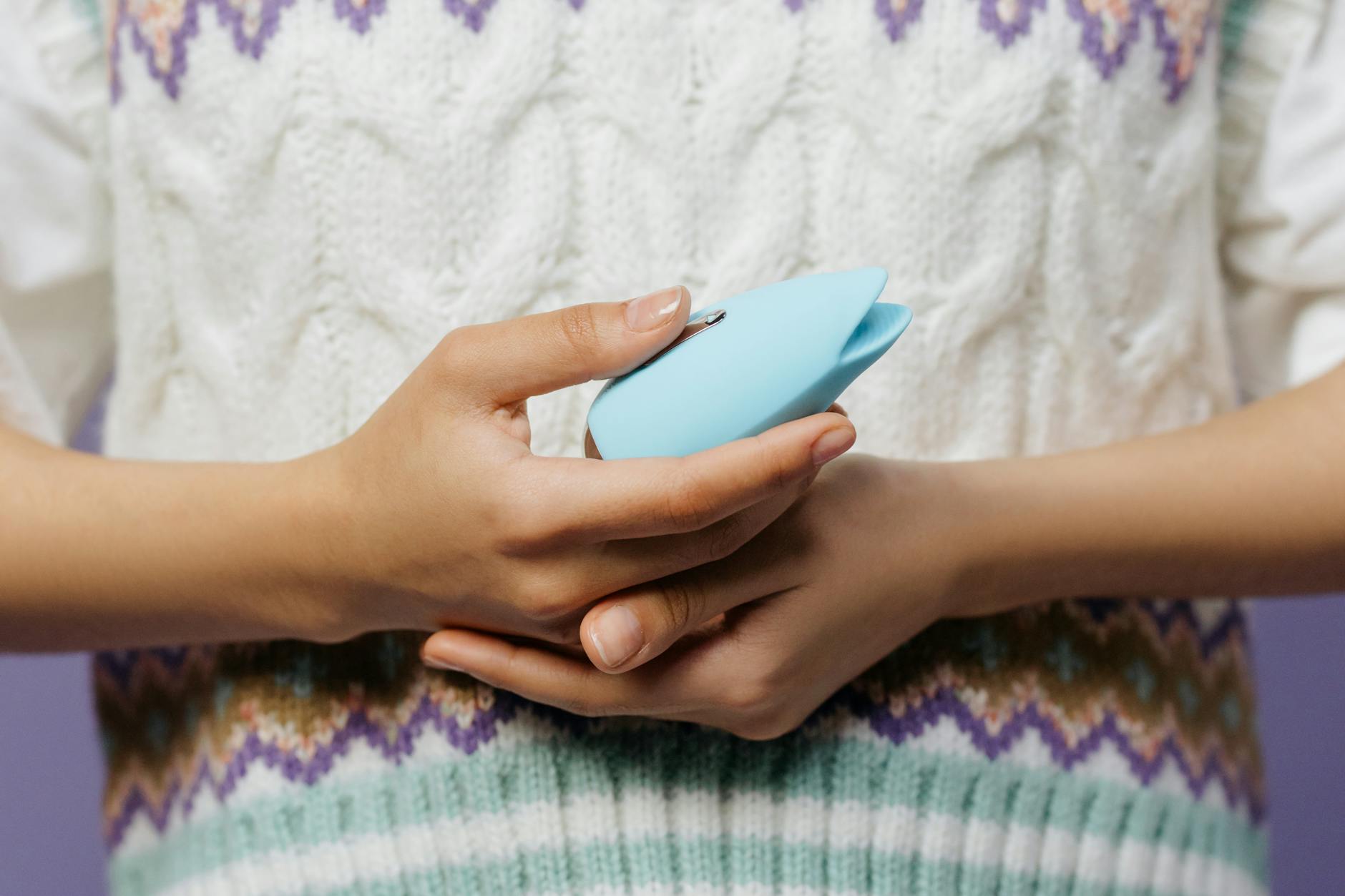
Let's talk about the thing you're actually worried about
You want to introduce toys. You might want a lemon clitoral vibrator. And you're genuinely terrified your partner will think you're unhappy with them, that you're looking for something they can't provide, or worse, that you want them less.
That fear is so normal it should come with a welcome packet. Here's the hard truth: it's almost never about the vibrator. It's about whether you both believe pleasure is something you deserve and something you can explore together without it feeling like criticism.
Why long-term partners resist toys (and it's not what you think)
After years together, sex becomes shorthand. You know what works, what takes thirty seconds, what's reliable. Introducing a vibrator disrupts that. It's not bad disruption. It's just unfamiliar, and unfamiliar things trigger uncertainty, especially if someone's foundation is already shaky.
The real issue isn't jealousy about an object. It's often one of three things:
They worry it means you're bored. In long-term relationships, we conflate bored with underwhelmed. If you want something new, the leap is "I'm not enough." That's the narrative running underneath. It's not rational, but it's there.
They're anxious about performance. A toy is a comparison point they can't control. A partner's hands and body are knowable. A lemon vibrator is precise, consistent, mechanical. Some people feel that as a threat to their competence.
They're embarrassed or out of their depth. If a partner didn't grow up with conversations about pleasure, sexuality, or desire, adult toys can feel clinical or shame-adjacent. They don't know the language yet. They don't know where toys live in their framework of sex and intimacy.
None of these worries means your partner doesn't love you or doesn't want you to feel good. It means they need the context reframed.
The conversation before the toy arrives
Timing matters. Not during sex. Not right before bed when energy is low. Pick a time when you're both rested, alone, and not in a hurry. Sunday afternoon works. Tuesday evening works. During a stressful day does not.
Start with desire, not dissatisfaction. This is critical.
"I've been thinking about what would make me feel more pleasure, and I think trying something new together might be fun. I don't want this because anything is wrong. I want it because I want to feel more."
Listen to that language. It doesn't position the toy as a replacement. It positions it as an expansion. You're not saying "I need something you can't do." You're saying "I want to experience more of what we already have."
Be direct about what you're imagining. "I've been reading about lemon vibrators. They're designed for clitoral stimulation and they work really differently from a partner's touch. I think it could feel amazing during sex with you, or alone when I'm thinking about you." That last part matters. It bridges the solo/partnered gap and reminds them they're still in the picture.
Answer the question they won't ask. "I want to try this with you sometimes, and sometimes alone. That doesn't mean I want you less. It means I want to know my own body better so that when we're together, I can tell you exactly what I want."
Give them time to sit with it. Don't expect an enthusiastic yes immediately. Skepticism, hesitation, even "I don't know" are normal. That's their brain catching up.
Choosing the right toy for both of you
Not all vibrators are equal for partnered use. Some are too small, some are too loud, some are designed entirely for solo play.
Look for toys that are ergonomic for both your hands and theirs. A lemon vibrator, or clitoral vibrator built for couples use, should feel intuitive whether you're holding it, your partner is, or you're both touching it at once. The shape matters. If it's too bulky, it gets in the way. Too small and neither of you can hold it comfortably.
Sound is underrated. If a toy is loud, it can break intimacy. You're both suddenly hyperaware of the vibration instead of the sensation. Quieter toys let you stay in the moment.
Settings and intensity are everything. You want something with a range. Lemon adult toys typically come with multiple patterns and power levels so you can match it to how you're feeling that day, how aroused you are, and whether you want building stimulation or just a hum under everything.
Silicone is standard for good reason. It's non-porous, easy to clean, lasts forever, and feels better against skin than plastic. Water-based lube works with silicone toys. That detail matters more than it sounds.
The first time you use it together
Don't treat it like a performance. This isn't about outcome. It's about curiosity.
Start clothed or semi-clothed. You might just hold the toy together, feel it, laugh at how weird it is at first. That's completely valid. Let the awkwardness be there. It's normal and it passes.
When you're ready to use it during sex, go slow. Maybe it's during foreplay. Maybe it's while you're inside each other, and one of you is holding it against your clitoris. There's no script here. You're improvising together.
Talk while it's happening. Not performance talk. Real talk. "Does this feel good?" "Do you like this?" "Should I speed up?" "Can you hold it there?" That kind of navigation is actually intimate. It's not killing the vibe. It's building it together.
After, don't pretend it didn't happen. "That was fun." "I liked when you did X." "Let's try it again next time." Normalize it in the conversation, not just in the moment.
What happens when you use it solo (and your partner needs to be okay with that)
Most people who bring toys into a relationship want to use them alone sometimes too. That's healthy. That's knowing your body, understanding what gets you off, and having agency over your own pleasure.
Your partner might need reassurance here. It's not about them. It's about you learning yourself so deeply that when you come together, you're both more present. Solo pleasure with a lemon clitoral vibrator isn't a replacement for partnered sex. It's research. It's self-knowledge.
If a partner feels threatened by that, that's a larger conversation about trust and insecurity. Those are worth having with honesty, but they're not your responsibility to manage. You deserve to know your own body.
What to do if resistance doesn't budge
Some people need time. Some people need to see that nothing changes between you except that you feel better. Some people need a therapist to unpack their stuff about sexuality and worth.
If your partner refuses outright, stays angry, or makes you feel ashamed for wanting more pleasure, that's information about the relationship. Not about you. Not about the toy.
A long-term partner who loves you wants you to feel good, even if they feel nervous at first. Nervousness is fixable. Refusal to even try, refusal to hear your reasoning, refusal to work through their discomfort. That's a different problem, and it's not about lemon vibrators.
FAQ
Will using a toy during sex make me dependent on it?
No. Your body doesn't become "addicted" to vibration the way popular fear-mongering suggests. What does happen is you discover what kinds of stimulation work best for you. That's not dependency. That's data. You can still orgasm without a toy. You just now know you can also orgasm with one. Knowledge doesn't erase previous capabilities.
How do I know if my partner is actually okay with this or just saying yes to keep the peace?
Watch their actions over time, not their words in the moment. Do they ask about it later? Do they suggest using it? Do they seem relaxed when it comes out? Or are they silent, stiff, and quietly resentful? Real comfort shows up in follow-up conversations and in their body language. If you're unsure, ask directly: "I want to make sure you're genuinely comfortable with this. Are you?" Give them permission to say no.
Can we use a clitoral vibrator if my partner has erectile dysfunction or takes medications that affect performance?
Absolutely. In fact, adding a toy sometimes takes pressure off performance and makes sex better for both of you. When someone isn't worried about maintaining an erection, they can relax and enjoy sensation. A lemon vibrator gives clitoral stimulation independent of what's happening elsewhere. That can actually reduce anxiety and increase pleasure across the board.
What if I want to try a lemon sexual toy but my partner wants something completely different?
Compromise on what you bring into the bedroom together, but not on what you explore alone. If you want a lemon clitoral vibrator and your partner prefers something else, you can each have your own toys. You can use your toy when you're alone or during partnered sex. Your partner can use theirs. Or you find a toy you both like and you both have access to it. The point is autonomy plus collaboration.
Is it normal to orgasm way faster with a vibrator than with a partner?
Completely. Vibration is a different kind of stimulation than fingers or a penis. It's often more consistent, more targeted, and more intense. That doesn't mean one is better than the other. They're just different. Your body responds differently to different inputs. A lemon vibrator isn't better than your partner. It's just different. Some people like pairing them. Some people use them at different times. Both are normal.
My partner wants to watch me use a toy alone but it makes me uncomfortable. Do I have to?
No. Your comfort comes first. You can use a toy during partnered sex. You can use one alone in private. You don't have to perform your pleasure for anyone. If your partner pushes past your boundary, that's a respect issue, not a toy issue. Set the boundary. Enforce it. If they can't respect it, that's data.
The actual point
Introducing a lemon vibrator into a long-term relationship isn't about the toy. It's about both of you deciding that pleasure matters, that experimentation is safe, and that wanting more doesn't mean you want less of each other. That decision takes vulnerability from both people. It takes communication that most of us weren't taught. It takes willingness to feel awkward and do it anyway.
If your partner can show up for that conversation, you've got something worth protecting. If they can't, that tells you something important about whether this relationship is built for your growth.
Neither outcome is about the vibrator. It's about who you're with and whether they're willing to grow with you.
Ready to have the conversation? Start here: "I want to explore more of what feels good. Will you explore with me?" That's all you need.