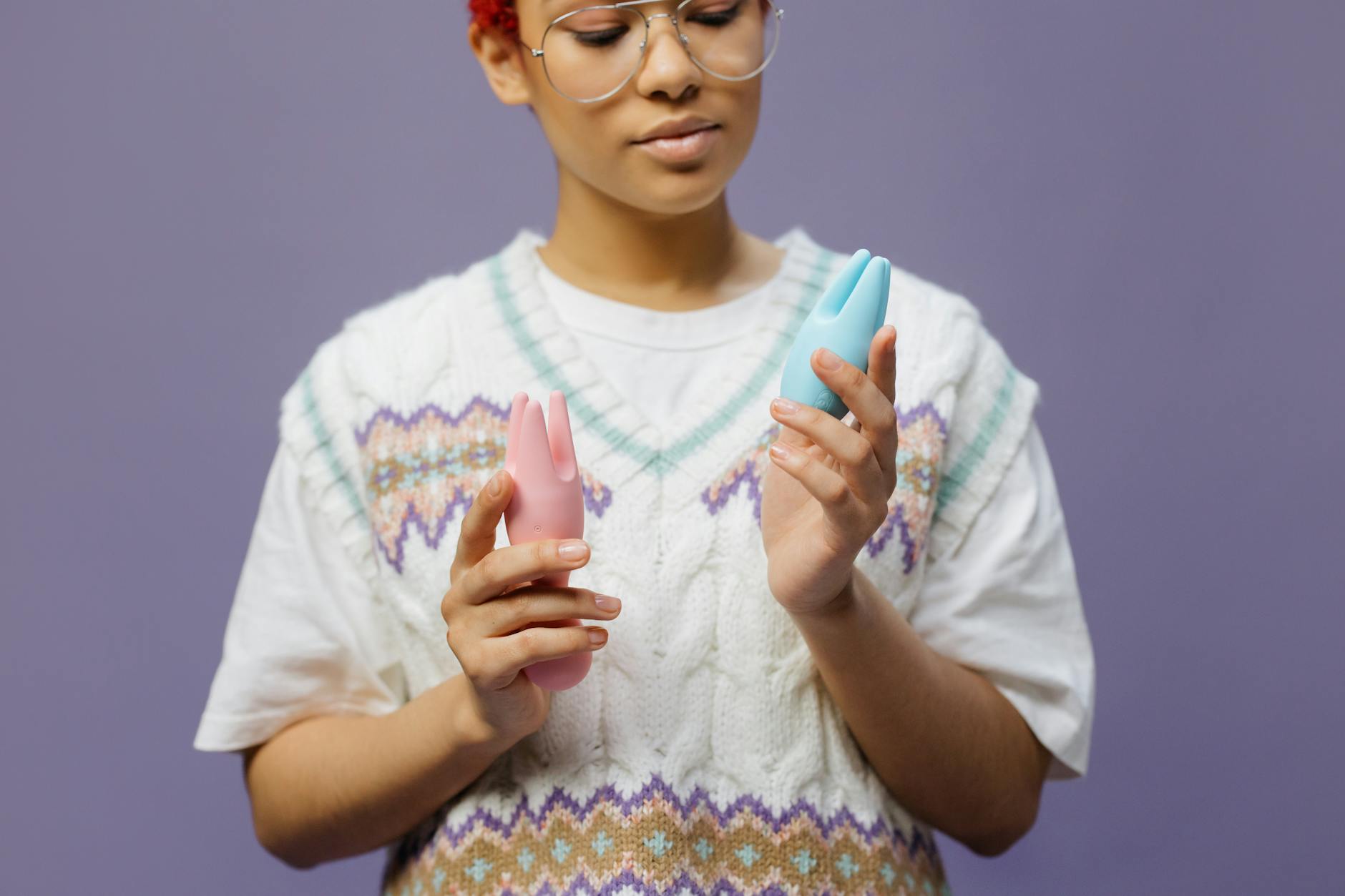
Let's name the thing nobody talks about
You like someone new. The chemistry is there. But the thought of introducing a vibrator feels like asking them to sign a contract that says "I am not enough." It doesn't matter that intellectually you know that's not what it means. Your nervous system doesn't care about logic when you're still in the early months of learning if this person is safe.
Here's what I see in my therapy practice: most people don't hesitate about vibrators because they're ashamed of pleasure. They hesitate because they're afraid of what their partner will think. And in new relationships, that fear is louder because you haven't yet accumulated enough proof that they're the type of person who gets it.
The anxiety is real, and it's worth taking seriously
There are several reasons why introducing a lemon clitoral vibrator to a new partner can trigger anxiety, and none of them are stupid. First, you're asking them to see you at a vulnerable moment. Pleasure is exposure. Second, you're implicitly asking "Can you handle that I have needs that exist independently of you?" That's a real question, and it deserves a real answer. Third, early relationships have fragility baked in. You're still deciding if you trust this person. Handing them something that intimate before you're certain feels risky.
What makes this different from the early days when you first slept together is that now there's a third object in the room. Your partner has to navigate not just your body and their own, but also their feelings about the vibrator itself. Some partners worry it means you're not attracted to them. Others worry they're doing something wrong. Some just need reassurance. All of that is navigable. But first you have to know what conversation you're actually trying to have.
Before the conversation: check in with yourself
Why do you want to introduce a lemon vibrator now? Be honest. Are you introducing it because you genuinely want more pleasure in partnered sex, or because you're trying to fix something you think is broken about the relationship? Those are different conversations.
If you're introducing it because sex has felt a little flat or disconnected, that's legitimate. If you're introducing it because you're anxious about whether your partner is satisfied, pump the brakes. That's relationship anxiety wearing a vibrator disguise, and no toy will fix it.
Next, know what you want from your partner's involvement. Do you want them to use the lemon vibrator on you? Do you want to use it while they watch? Do you want to use it during sex? Do you want to explore it solo first and just have them know it exists? These aren't small details. They change the entire shape of the conversation.
The conversation itself (how to actually start it)
Don't spring it on them. Don't hide it under the bed and hope they "discover" it. Talking about it first isn't less sexy. It's actually sexier because it means you're comfortable enough with them to ask for what you want.
Start with something like: "I've been thinking about trying something that might feel good, and I wanted to talk to you about it first." That opening does three things. It signals that you value their input. It frames the vibrator as something for your pleasure, not as a commentary on them. It sets a tone of collaboration rather than surprise.
Then be specific. "I want to explore using a clitoral vibrator during sex" is clearer than "I want to try something new." Specificity removes the anxiety gap where partners fill in blanks with their own fears.
If they ask why, give them the truth. "I think it would feel good for me" is enough. You don't need to justify. You don't need to say "It's not about you" unless they make it about them. If they do, that's information. That's them showing you who they are in a moment of vulnerability. Pay attention to it.
Common reactions and what they actually mean
Some partners will say yes immediately. They might be relieved. Some people have been waiting for permission to bring toys into the relationship. That's great.
Some partners will say yes but seem hesitant. They're probably managing a mix of curiosity and insecurity. You can help by being clear about what you want from them. "I just want you to know this exists and I'd like to try it. I'm not asking you to use it unless you want to." That removes the pressure.
Some partners will ask if it's because they're not satisfying you. This is the moment to tell them the truth. A vibrator isn't about dissatisfaction. It's about expanding the range of sensation. It's about your nervous system and your anatomy, not their performance. If you can say that calmly, without defensiveness, most partners will hear it.
Some partners will say no. That's harder. You get to decide what that means for you. Some people have firm boundaries about toys in partnered sex. Some people need more time before introducing them. Some people are managing their own anxiety and need reassurance. You also get to decide if you want to respect that boundary long-term or if it's a dealbreaker. Both are valid.
When you're actually using it together
Start slow. The first time you use a lemon clitoral vibrator with a new partner, the goal isn't a mind-blowing orgasm. The goal is to prove to yourself that it's not as scary as you thought.
Use the lower settings first. You might be more sensitive to sensation when you're anxious, and you want to stay in control. Your partner might be more comfortable if they see you in control too.
Talk during it. "That feels good" or "I like it a little lower" keeps communication alive. It also reminds your partner that you're experiencing pleasure, which usually makes them less anxious too. Pleasure is contagious.
If it doesn't feel amazing the first time, that's fine. You're learning how the lemon vibrator feels in a new context. You're learning how it feels with another body in the room. You're learning if your partner can be present without making it weird. All of that takes more than one try.
The aftermath: what to do with the anxiety that lingers
After you use a vibrator with a new partner, some anxiety will probably linger. You might replay the moment. You might wonder what they thought. You might worry you made it awkward. Most of that is just your nervous system recalibrating to a new level of vulnerability.
The antidote is gentle. Check in with your partner. "I was a little nervous about that, but I'm glad we did it" is honest and it invites them to be honest back. Some partners will say they were nervous too. Some will say they loved it. Both responses give you information about who this person is.
If you feel more connected after, that's worth noting. If you feel more distant, that's worth noting too. That tells you something about whether this relationship has room for your whole self.
When to slow down or reconsider
If your partner responds with shame or mockery, that's a sign. Not a sign that you did something wrong. A sign that this person might not be safe for vulnerability. Early in a relationship is actually when you want to notice this. It matters more now than it will later.
If you feel like you have to minimize your pleasure to make your partner comfortable, that's also a sign. You get to want a lemon clitoral vibrator. You get to want it without apologizing. If you're constantly apologizing for your sexuality in the early months, that pattern usually gets worse, not better.
If your anxiety about introducing the vibrator is really about anxiety about the relationship itself, consider whether the toy is actually the issue. Sometimes we focus on sex because it's easier than focusing on trust. Sometimes we need to do relationship work before we can bring toys in. That's not a failure. That's wisdom.
The practical things that help
Clean your lemon vibrator before you use it with a partner. Not because there's anything wrong with it, but because you get to set the tone of care and intentionality. A partner who sees you take that seriously usually takes the whole thing seriously too.
Keep lubricant nearby. A lot of anxiety-related tension shows up as dryness. Water-based lubricant keeps the physical experience smooth, which usually helps the emotional experience feel smoother too.
Turn off your phone. The fact that you're willing to be interrupted signals that this doesn't really matter. It does matter. Protect the time.
Have a conversation afterward about what you both want next time. Do you want to do it again? Do you want to experiment with different settings? Does your partner want to be more involved? That conversation normalizes the vibrator. It says "This is part of how we have sex now." That's powerful.
FAQ: New Partners and Vibrators
What if my partner thinks the vibrator means they're not enough?
That's their fear, not your fault. You can acknowledge it gently. "I want more pleasure in our sex life, and I want it with you. This is part of that, not instead of that." If they can't move past that after reassurance, you might be dealing with deeper insecurity. That's something they need to work on, not something you should fix by giving up your pleasure.
Should I use the vibrator on my own first before using it with them?
Yes. Knowing how it feels on you, what patterns you like, what pressure feels good. That knowledge gives you confidence. When you're confident, your partner is usually less anxious too.
Is there a "too early" in a relationship to introduce a vibrator?
There's no hard rule, but I'd say after you've had at least a few honest conversations about sex and what you both want. If you can't talk about what you're not satisfied with, you probably can't talk about adding a vibrator. Wait until the foundation is there.
What if they want to use it but I'm not ready?
You get to say no. "I like knowing this exists and I'm glad you're open to it, but I want to use it on myself first." You don't have to hand over control before you're ready. Going slow is not rejection.
Can using a lemon vibrator together actually bring us closer?
It can. Shared vulnerability, shared pleasure, and clear communication often do bring people closer. But only if both people are there willingly. If one person is just going along with it, you'll feel the hesitation.
How do I know if my anxiety is about the vibrator or about the relationship?
Try this: imagine a partner who you completely trusted introducing a vibrator. Would you still feel anxious? If yes, it's about the vibrator. If no, it's about trust in this relationship. That's useful information.
The real thing
Introducing pleasure tools to a new partner is an act of trust. You're saying "Here's part of me that's independent from you. I'm inviting you into it." That takes courage. The anxiety you feel is evidence that you're doing something meaningful, not that you're doing something wrong. Most new relationships that last will eventually include conversations about pleasure, vibrators, and what you both need. The ones that move forward are the ones where both people stay honest. If this person is right for you, this conversation will bring you closer. If they're not, you'll find out sooner rather than later. Either way, you get the information you need.
Ready to explore this with confidence? Start with yourself. Learn what a lemon vibrator feels like when there's no one else in the room. Then, when the conversation happens, you'll know exactly what you're inviting them into. That knowledge changes everything.