
The thing nobody tells you about introducing toys early
Let's be real. You're not worried the toy itself is weird. You're worried what it says about you, or what your partner will think you're saying. That fear of being judged, or seeming too eager, or appearing like you're not satisfied with them. Here's the actual truth: introducing a lemon clitoral vibrator to a new partner is one of the clearest signals you can send that you're serious about pleasure, communication, and partnership.
I've worked with hundreds of couples navigating this exact moment. The ones who handle it well aren't the ones with perfect scripts. They're the ones who separate two conversations that keep getting tangled together: "I want my body to feel good" and "I want us to feel good together." Those are different, and that distinction changes everything.
Why early dating is actually the best time
Countintuitive, right? But here's the thing about introducing a lemon vibrator or any clitoral vibrator to a new partner: the earlier you do it, the less baggage it carries. You're not retrofitting pleasure into a relationship. You're building it in from the start.
When you bring toys into a relationship years in, there's narrative weight. "Why now?" "What changed?" "Does this mean something's wrong?" None of those questions exist if you bring it up in the first few months. It's just part of who you are and how you like to experience pleasure. That's it.
New partners also haven't built expectations around what sex looks like with you yet. They're not attached to a particular rhythm or dynamic. They're still learning. That blank slate is powerful.
The conversation starters that actually work
Don't ambush. Don't surprise them with it mid-sex for the first time. Do have a short conversation somewhere neutral, ideally not in the bedroom. Here are three framings that work.
Option One: The preference angle. "I know this is early, but I like being direct about this stuff. I use a vibrator as part of my solo pleasure, and I really enjoy using one during partnered sex too. It's not instead of partner touch—it's alongside it. I like the sensation and I like how it feels to share that with someone I'm with."
That sentence does three things: it positions the toy as an existing part of your life, it explicitly says it's not a replacement, and it frames it as something shared rather than something you're doing alone.
Option Two: The curiosity angle. "Can I ask you something kind of vulnerable? I really like using a clitoral vibrator, and I'd love to try that with you at some point if you're open to it. It's not a big deal either way—I'm just someone who knows what I like and I wanted to be honest about it early."
This one works if you genuinely don't know how your partner will react. It gives them an out, which paradoxically makes them less defensive. You're not demanding. You're asking.
Option Three: The pleasure-focus angle. "I know we haven't been together long, but I like being honest about sex stuff. I orgasm more reliably with a vibrator, and I love the idea of exploring that together. It's less about mechanics and more about—I want to have really good sex with you, and this helps me get there."
This frames the toy as a tool for both of you to experience pleasure together, not as a workaround for your partner's limitations. That matters.
What usually happens next (and how to handle it)
Most partners fall into one of four camps:
The enthusiasts. "Oh cool, let's try it." These people are sex-positive, curious, and either have experience with toys or are excited to explore them. Enjoy this. No further work needed.
The curious-but-anxious. "Yeah, maybe. I'm not sure how I feel about it." This is the biggest group. They're not rejecting the idea—they're processing it. Don't push. Say, "We don't need to do anything tonight. I just wanted you to know about it. We can explore whenever it feels right."
The mildly insecure. "Does this mean I'm not doing enough?" "Will you still want me?" "Is this because...?" These questions usually aren't about the toy. They're about attachment and reassurance. Your job is to slow down, make eye contact, and say: "No. My body is wired to respond strongly to this kind of stimulation. That's not about you. It's about my nervous system. I want this with you because I trust you and because I like having good sex with you."
Don't over-explain. One sentence, then: "Want to try it together sometime, or should we just drop it?" This puts the choice back in their court.
The flat-out no. "I'm not comfortable with that." Okay. You have a choice now. If it's a dealbreaker for you, that's valid information. If you can let it go, that's valid too. But don't agree to never use toys and then resent them later. That's the path to dead bedrooms.
How to actually introduce it during sex
Once you've had the conversation and you both want to try, the execution matters.
First time: you control it. Don't hand them a lemon vibrator and say "go wild." Use it on yourself while they're inside you, or while they're touching you. Let them see your body respond. That's hot, and it also shows them exactly how it feels and what the sensations look like from the outside.
Start slow. You know how to use your toy. They don't. Turn it on at a low setting. Let them feel the vibration for a few seconds before you use it on yourself. They should hear it, see it, understand what's happening.
Narrate a little. "Oh, that feels good." "The sensation of you and the vibrator together feels amazing." This removes the guesswork. They're not wondering if you're enjoying it or if something's wrong. They know.
Let them try it, if you want. This is optional. Some people love handing their partner the toy and guiding their hand. Others prefer to keep that tool for themselves. Both are fine. Do what feels right.
The vulnerability piece (why this actually builds trust)
Here's what I've observed clinically: couples who can name their sexual preferences and explore them together develop faster intimacy and stronger long-term partnership satisfaction. That's not because the toy itself is magic. It's because you've had to be honest, your partner has had to be brave enough to listen without defense, and you've both chosen pleasure and curiosity over shame.
When you introduce a lemon clitoral vibrator to a new partner and they say yes, you're not just getting a toy into the bedroom. You're establishing a pattern: "In this relationship, we talk about what feels good. We support each other's pleasure. We're not embarrassed about bodies or sensation or asking for what we want."
That's the foundation for everything that comes after. Good sex, sure. But also good communication, better conflict resolution, and the kind of safety that makes long-term partnership actually work.
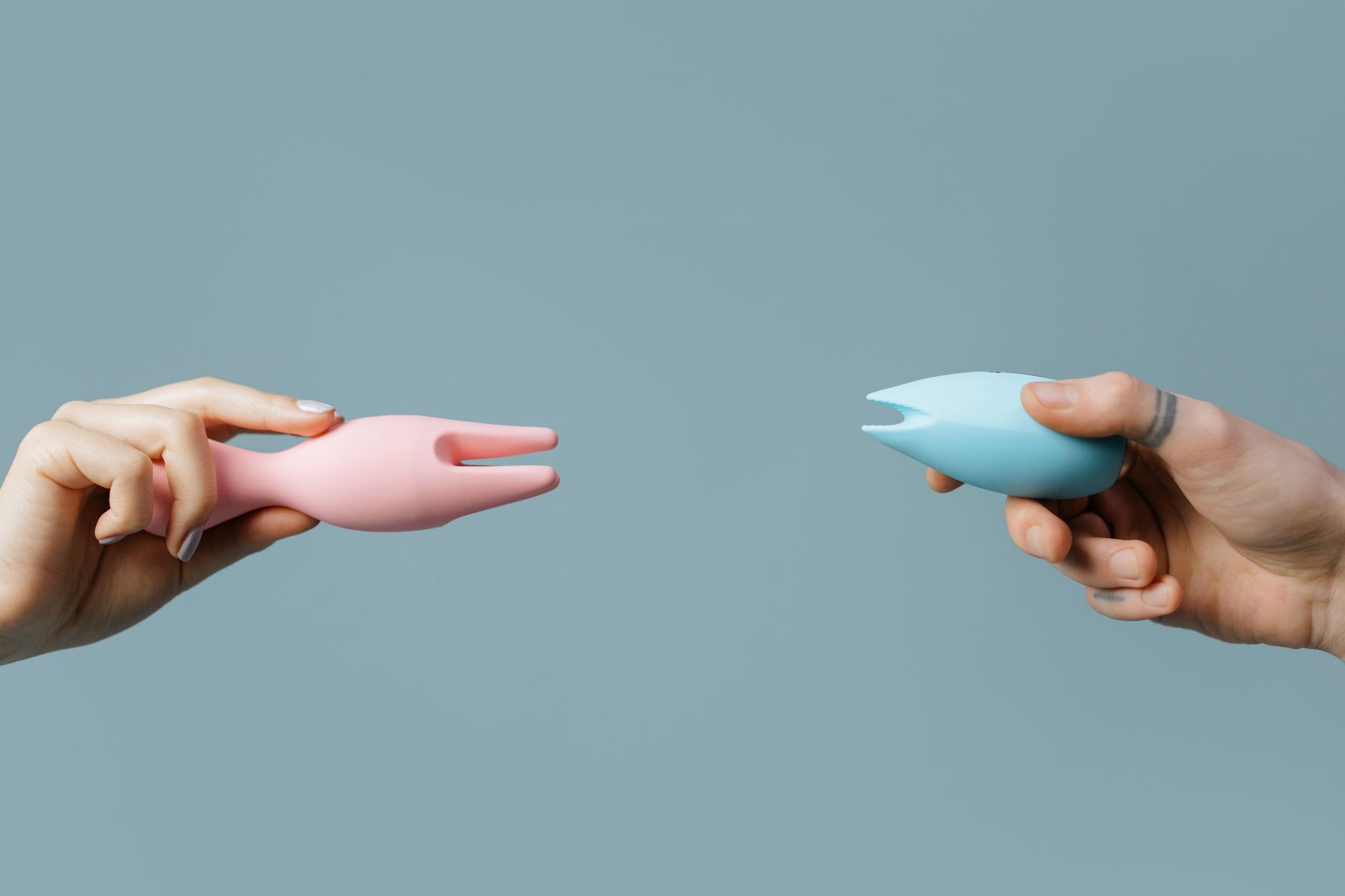
Photo by cottonbro studio on Pexels
Red flags and what they mean
If your partner responds with contempt (eye-rolling, mockery), that's a yellow flag. If they respond with anger or ultimatums, that's a red flag. Neither means you did anything wrong. It means they have some stuff to work through around pleasure, control, or insecurity.
You can't fix that for them. You can only decide if you want to be in a relationship with someone who responds that way to you naming a need. For most people, having that conversation early is the gift. It saves years of guessing.
Similarly, if they're overly enthusiastic in a way that feels like they're fetishizing you or the toy, or like they're more excited about the object than about you, that's also information. A healthy response is curiosity about your pleasure, not fascination with the toy itself.
Making it routine (not a big deal)
Once you've tried it together, the goal is to make it normal. You want a world where reaching for a lemon vibrator feels as routine as reaching for lube or changing positions.
The way you do that is by using it matter-of-factly. Don't make a ceremony of it. "Want to use my toy tonight?" Same tone as "Should we try a different position?" The less you perform confidence, the more they feel it.
Over time, many partners want to hold the toy while you use it, or use it together while they're touching you another way. That's how you know the initial vulnerability paid off. The toy isn't separate anymore. It's just part of your shared sexual life.
What if you've never used a vibrator before (and this is new)?
Introduce the toy solo first. Spend a few sessions alone with it, understand what you like, what settings feel good, how long it takes you to orgasm. You need that baseline before you introduce your partner to it.
Why? Because if you're learning the toy and learning your partner's presence at the same time, you'll have no idea what's actually working. Is it the toy? Is it the intimacy? Is it timing? Solo exploration gives you clarity.
Once you know what you like, teaching your partner is easy. "I like it on this setting" and "a little bit to the left" are instructions they can follow. That specificity is sexy and it also makes the experience better for both of you.
The psychological shift that happens
Introducing a clitoral vibrator like a Lem to a new partner is one of the fastest ways to move from "I hope they like me" to "I know what I want and I'm sharing that with someone I trust." That's a massive psychological difference.
You're no longer performing a version of sexuality that you think they'll prefer. You're inviting them into your actual pleasure. That shift changes how you feel during sex, how you communicate after, and how your partner perceives you. You're more confident. You're more present. You're more yourself.
That's not because of the toy. It's because you decided early on that your pleasure mattered enough to be honest about. Everything else flows from that.
Common questions people ask
Why should I use a lemon vibrator specifically instead of any other clitoral vibrator?
Lemon vibrators use suction-based stimulation rather than traditional vibration, which feels fundamentally different. Many people find suction gentler on sensitive tissue but more intense in terms of sensation. That unique sensation is worth communicating to your partner. "This isn't like a regular vibrator—it feels more like a gentle suction sensation." That's helpful for them to know.
What if my partner wants to watch but doesn't want to participate?
That's completely fine. Some people need to observe before they participate. Some people never participate but enjoy witnessing their partner's pleasure. That's a valid preference. The key is that you've made it not-taboo.
Is it weird to bring a toy into the relationship this early?
No. The only thing that makes it weird is if you treat it like a secret or like something shameful. Bring it up with the same casualness you'd use to talk about any other sexual preference. "I like it when someone touches my neck," "I like using a vibrator," "I like being on top." All the same category.
What if they want to use it on me but I'm not ready for that?
Then you say that. "I'd like to use it on myself first, with you watching. I'll let you know when I'm ready for something different." Consent and boundaries are sexy.
Can we use a lemon vibrator if we're doing it quickly or in an unconventional position?
Yes, but it takes some coordination. Start with positions where your hands are free or where your partner can reach the clitoris easily. Missionary or you on top work well for beginners. As you get more comfortable, you'll figure out what works for your bodies.
How do I bring it up if I've already been dating for a few months without mentioning it?
The same way. "Hey, I want to talk about something. I've been using a vibrator and I'd love to try that with you at some point. I should have mentioned it earlier but I wasn't sure how." Honesty about why you waited is actually endearing. It shows you were thinking about the conversation and doing it right.
The last thing you need to know
Your pleasure is not a burden on your partner. It's not a demand you're making. It's an invitation. You're saying, "I know what feels good for my body and I want to share that with you." That's maturity. That's hot. That's the foundation for a partnership where both people actually feel good.
If your partner can't meet that invitation with curiosity or enthusiasm, that tells you something important about whether they're the right fit long-term. Better to know that now than to spend years censoring yourself.
Bring the toy. Have the conversation. See what happens. Your future self will thank you for the honesty.