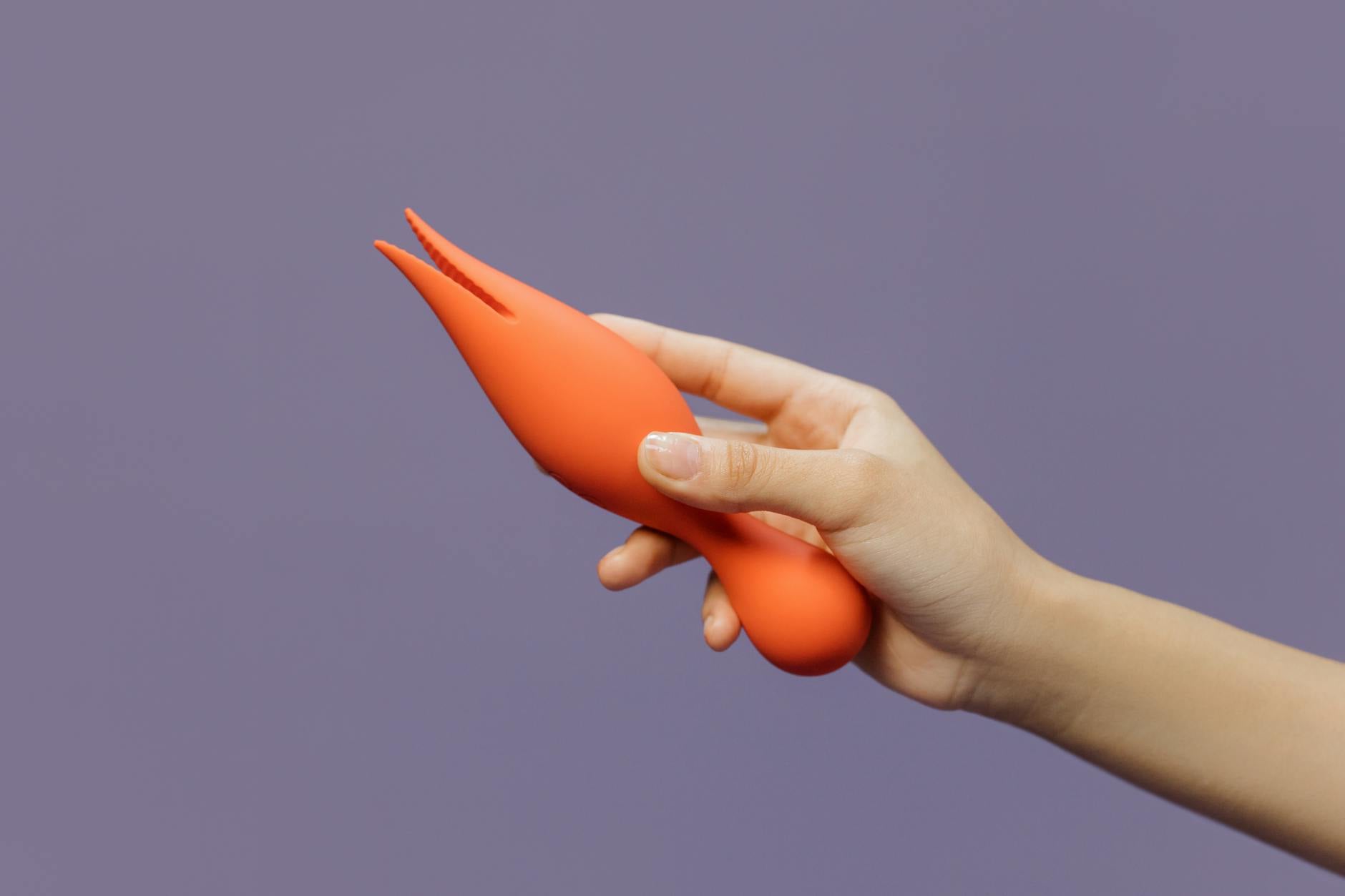
Let's start with the honest thing
Not everyone's arousal builds like a slow burn. Some of us have a flat baseline. You're not "broken," you're not "less sexual"—you're just someone whose nervous system doesn't fire up the way the movies suggest it should.
Maybe you've never had that spontaneous, rushing feeling. Maybe it used to come easily and then stopped. Maybe you're someone who can genuinely enjoy pleasure once you're in it, but getting there requires work. The gap between "not aroused" and "ready for an orgasm" feels like crossing a desert instead of a gradual climb.
This is where lemon vibrators change the game. They don't require you to warm up first. They give you access to pleasure on your own timeline, not on your body's broken promise of spontaneous desire.
The physiology of a slow-starter arousal pattern
Arousal isn't one thing—it's a cascade. Your brain registers interest. Your nervous system shifts. Blood flows to your genitals. Lubrication appears. The clitoris begins to swell slightly, making it more responsive to touch.
For some people, this whole sequence takes five minutes. For others, it takes thirty or never fully happens without direct stimulation.
Neither is wrong. The nervous system isn't a hierarchy. But if you've spent years being told your arousal should feel a certain way, you've probably internalized the idea that something's off.
It's not. You just have a different entry point.
Why lemon vibrators work for low-arousal baselines
Three reasons this matters:
First: They bypass the waiting game. A lemon clitoral vibrator doesn't care if you're "in the mood." It stimulates the clitoris directly, waking up nerve endings that don't always wake up on their own. You don't have to convince your body. You just have to make contact.
Second: They're consistent. Your partner's touch varies with pressure, angle, and rhythm based on what feels good to them. A lemon vibrator delivers exactly the same sensation every time. That consistency can actually help your body recognize the pattern and respond more reliably than it might to unpredictable stimulation.
Third: They separate arousal from the rest of your life. If you're someone whose arousal baseline is low because you're stressed, burned out, or just naturally wired that way, you don't have to fix that first. You can access pleasure while your stress hormones are still running. The vibration does the work your nervous system doesn't automatically do.
Building a realistic timeline
Here's what works: instead of waiting to feel aroused, you build arousal through stimulation. It sounds backward. It's not.
Set aside twenty to thirty minutes when you won't be interrupted. This isn't a sprint.
Start with settings one or two on your lemon vibrator—the gentle ones. Make contact with the clitoris and stay there for several minutes. Don't expect to feel wildly turned on immediately. You're teaching your body a new pattern: this sensation leads to pleasure.
After five to ten minutes, you might notice the first shifts—a slight warmth, a bit of sensitivity, a hint of response. That's your arousal beginning. It's smaller and slower than spontaneous desire, but it's real.
Then you can start shifting patterns. Change the setting. Explore different angles of contact. Let sensation build from there.
Many people with low baseline arousal find that their most intense pleasure comes twenty to thirty minutes in, not at the beginning. Your nervous system is slower to respond, but once it's engaged, it can sustain pleasure longer and more intensely than quick arousal cycles.
The mental game is half of it
If you've spent years believing something's wrong with your body, using a lemon vibrator won't magically fix that story. You'll still expect it to feel "wrong" in some way.
Shift your internal narrative: this is how my arousal works. Low baseline doesn't mean low capacity. It means you're not someone who gets turned on by thinking alone. You get turned on by sensation and time.
That's not a limitation. It's information.
When you stop fighting your arousal pattern and instead work with it, everything changes. You stop waiting for inspiration that doesn't come. You stop comparing yourself to people with different nervous systems. You stop believing you need to fix yourself before you deserve pleasure.
You just use the tool that works for your body.
Timing matters more than spontaneity
One research reality: arousal takes longer when you're not in an activated state. If you're scrolling, working, tired, or mentally elsewhere, your nervous system isn't ready. That's normal.
Plan your pleasure. Not in a clinical way—just in a realistic way. Shower first if that helps you feel present. Dim lights. Put your phone in another room. Give yourself permission to take time.
Many people with slow-burn arousal patterns actually prefer scheduled pleasure to spontaneous sex. You can actually relax into it instead of feeling pressure to become aroused on someone else's timeline or your own fantasy timeline.
There's no "should" here. Your pleasure works on your schedule.
Using lemon vibrators as part of a longer exploration
If you have a partner, a lemon clitoral vibrator can actually deepen intimacy when arousal is slow. Instead of your partner feeling like they're "doing something wrong," you can shift the experience: "Here's what actually works for my body. Let's use this together."
They can apply the vibrator while you guide them. You can use it while they touch you elsewhere. You can take turns exploring what feels good.
The vibrator becomes a tool that removes pressure and opens up new sensations, not a replacement for connection.
If you're solo, a lemon vibrator is permission to access pleasure without waiting for desire to arrive. You deserve that. Not when you're finally "in the mood." Now.
Practical setup for consistent sessions
Start by carving out one dedicated time per week when you explore with your lemon vibrator. Not because you have to. Because you're gathering data about what your body actually responds to.
Begin on setting one or two. Most lemon vibrators have multiple intensities. You're looking for a rhythm that feels like it's creating sensation, not pain or discomfort.
Stay with one setting for several minutes. Notice what happens. Does sensitivity increase? Does the sensation shift from neutral to pleasant?
Then experiment. Change settings. Angle the vibrator differently. Move it slightly. You're learning your own geography.
Keep it simple. Lubrication can help—it reduces friction and makes sensation feel smoother. Water-based lube works with any toy.
The goal isn't orgasm in this phase. The goal is data. Your goal is to understand: here's how long my arousal takes to build. Here's the sensation that actually registers. Here's where I want more intensity.
Once you know that, everything else gets easier.
When to check in with a professional
If your low arousal baseline is new and came alongside other changes—depression, medication shifts, relationship stress, major life transitions—talking to a therapist or doctor is worth it. Sometimes low arousal is a signal that something else needs attention.
But if this is just how your body works, if you've always been a slow-starter, and if you can access pleasure once you're in it, you're not broken. You're working with what you've got.
A lemon vibrator just makes that work easier.
The long view
Your arousal pattern isn't a flaw you overcome. It's a rhythm you learn to work with. The best tool for that is one that doesn't wait for your body to spontaneously light up. It just creates the sensation that wakes things up.
Once you stop fighting how your body works and start using tools designed for it, pleasure becomes something you can access reliably instead of something you chase and lose.
That changes everything.
People also ask
How long does it take for lemon vibrators to work if you have low arousal?
Usually somewhere between five and twenty minutes of consistent stimulation. Some people feel a shift within minutes. Others need longer. The key is staying with the sensation without expecting an immediate response. Your arousal is building even if you can't feel it yet. Many people find that it's the twenty-minute mark where pleasure really becomes noticeable. This is completely normal and doesn't mean anything is wrong.
Can you use a lemon vibrator if you don't feel any sexual desire?
Absolutely. Desire and arousal aren't the same thing. You can have zero desire and still have your nervous system respond to direct clitoral stimulation. In fact, for people with low-arousal baselines, stimulation often comes before desire. Your body wakes up first, and then the interest follows. A lemon clitoral vibrator works independent of whether you feel "in the mood" because it's creating physical sensation, not depending on your mind to do the work.
Does using lemon vibrators regularly help increase baseline arousal over time?
Yes, for some people. Regular stimulation can help your nervous system recognize patterns and respond more quickly with practice. But the bigger shift is usually internal: you learn that you don't need to feel spontaneous desire to access pleasure. You might get faster at arousal, or you might just get more comfortable with your longer timeline. Either way, you stop waiting and start planning, which changes everything about how you experience pleasure.
What setting should you start on if arousal takes forever for you?
Start on the lowest setting available. Usually that's setting one or two on a lemon vibrator. You want sensation without overwhelming stimulation. If the lowest setting feels too gentle and you're not noticing anything, move up to the next level. The goal is to find a setting where you actually feel something happening, not where it feels intense. Intensity comes later, once your arousal is building.
Is low arousal baseline the same as low libido?
Not quite. Low libido usually means you don't want sex. A low arousal baseline means your body takes longer to warm up physically, but you might want sex perfectly fine once you're in it. Someone with a low arousal baseline can have strong desire but a slow-moving nervous system. Someone with low libido might not be interested in sex at all. They're different problems with different solutions. A lemon vibrator helps with the arousal-baseline piece by giving you direct stimulation that doesn't depend on desire arriving first.
Can you combine lemon vibrators with other kinds of stimulation if arousal is slow?
Yes, and often that's helpful. Some people find that pairing vibration with other sensation helps build arousal faster. That might mean touching yourself elsewhere while using the vibrator. It might mean having a partner touch you while you use the toy. It might mean combining the vibrator with fantasy or audio. The key is finding what actually accelerates things for your body. For some people, multiple sensations help. For others, focusing on just the vibrator is less overwhelming and more effective. Experiment.
The bottom line
If your arousal doesn't build the way other people describe theirs, you're not the problem. Your nervous system just has a different timeline. A lemon clitoral vibrator gives you direct access to pleasure without waiting for spontaneous desire to arrive. You plan your pleasure, you make contact, and your body responds to sensation in a way it might not respond to waiting.
That's not settling. That's working with reality instead of against it.
If you want to explore what actually works for your body, start with a low setting and give yourself twenty to thirty minutes. Most people find their rhythm within a few sessions. Once you understand how your arousal actually works, pleasure stops being something you chase and starts being something you know how to access.
Ready to experiment? Get in touch if you have questions about what tool might work best for you.