The thing nobody tells you about long-term desire
After five, ten, or fifteen years with someone, your nervous system forgets what novelty feels like. Not because the person changed. Not because you fell out of love. But because predictability is the opposite of arousal, and your body knows it.
This is wildly different from the flatness that comes after depression or medication. This is habituation. Your brain has stopped sending the "pay attention" signal during sex because it already knows exactly what's coming. And when your brain stops paying attention, your genitals follow.
Here's the counterintuitive part: the problem isn't your partner or your relationship. The problem is that you and your partner have accidentally created a system where neither of you is getting the novelty your nervous systems need to stay turned on.
Why long-term couples lose sensation (it's not what you think)
There are three neurological patterns I see consistently in couples who've been together for years and suddenly can't feel much during sex.
Pattern one: The predictability trap. You know the sequence. You know how long it takes. You know the finish line. This knowledge kills arousal. Arousal lives in uncertainty and novelty. When your brain can map the entire experience in advance, it downshifts into autopilot.
Pattern two: The performance reflex. Long-term relationships often develop an unspoken script: you do your part, they do theirs, you both try to get there. This is cooperative robotics, not arousal. Your nervous system can feel the difference between being present and being task-focused, and it shuts down accordingly.
Pattern three: The attention deficit. In newer relationships, you watch your partner constantly. You're attuned to every micro-response. Years in, you stop watching. You're on your phone, you're thinking about work, you're mentally editing your grocery list. Your partner feels absent even when they're right there.
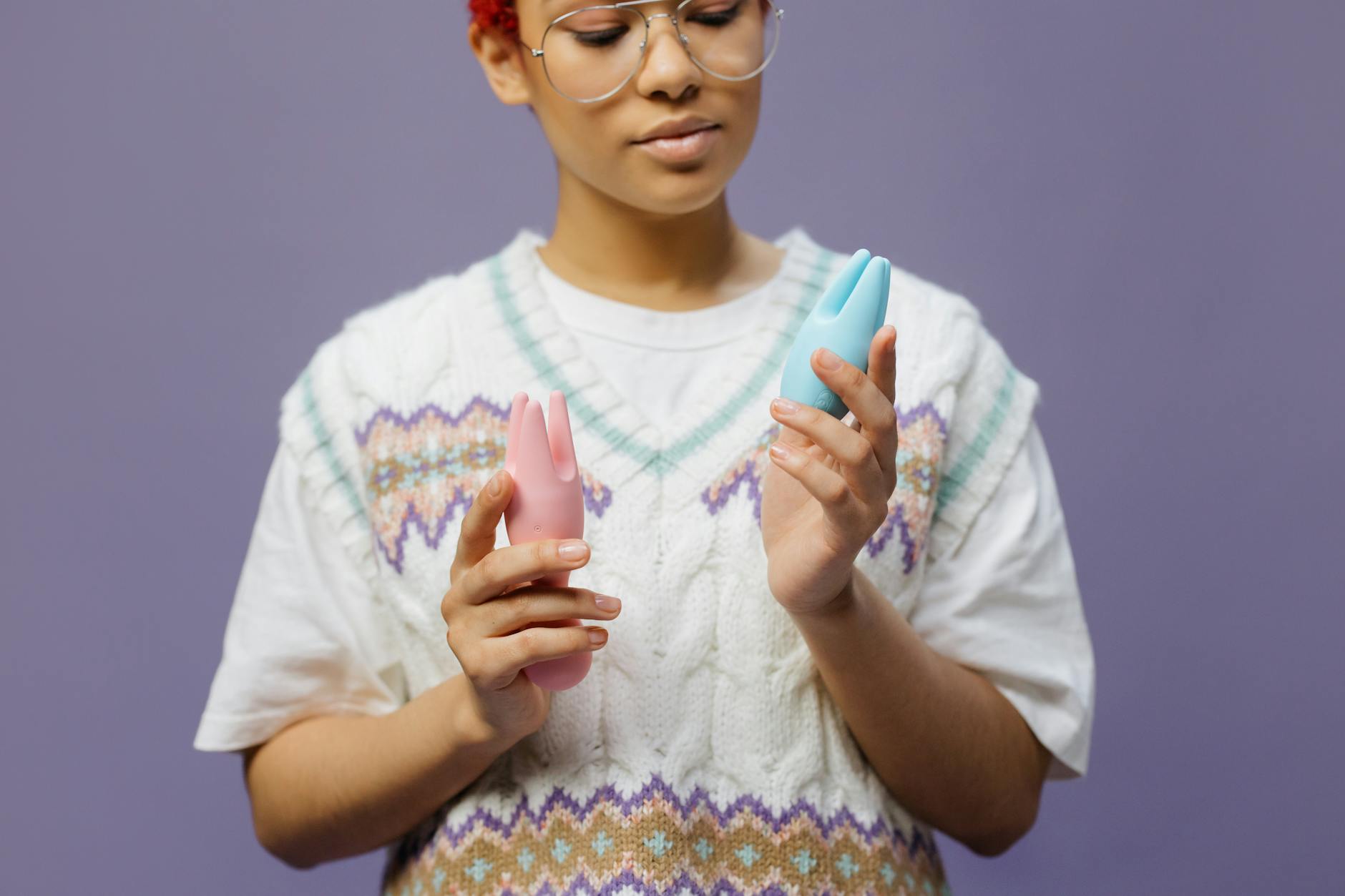
All three patterns muffle sensation. A lemon vibrator, or any clitoral suction toy, can interrupt the pattern. But only if you use it differently than you've been having sex.
Why clitoral suction changes the equation
Traditional vibrators buzz. Your body gets used to that frequency. The sensation flattens. A clitoral suction device like the Lem works differently. It uses gentle suction and pulse patterns that stimulate nerve clusters in a way that actually feels less familiar, even if you've tried other toys before.
Suction feels novel. Your nervous system hasn't habituated to it the way it has to a partner's touch or even a standard vibrator. This novelty wakes something up.
But here's the part that matters for long-term couples: you can't just hand your partner a lemon vibrator and expect magic. The toy itself isn't the solution. The solution is what the toy forces you to do differently: slow down, watch each other, build tension differently, and acknowledge that you both need something other than what you've been doing.
How to use it solo first (this matters)
Before you introduce a Lem to partnered sex, you need to recalibrate your own nervous system. This means solo time with the toy, and not the rushed kind.
Set aside twenty to thirty minutes when you have no audience, no rush, and zero agenda. Start with the lowest suction setting. The point isn't to chase an orgasm. The point is to feel sensation again, to notice what your body responds to, and to remind yourself what novelty feels like.
Many people in long-term relationships realize during solo exploration that they've been disconnected from their own pleasure, not just their partner's touch. You might find that you prefer patterns you never would have asked for. You might find that slower is better than faster. You might find that you like being touched in places your partner never tries.
This solo information is gold. Because when you bring it back to your partner, you're not saying "the old way didn't work." You're saying "I discovered something new about what my body wants." That's a completely different conversation.
Using lemon vibrators together: the reset protocol
When you're ready to introduce the Lem into partnered sex, treat it as a conversation starter, not a performance enhancer.
Start by using it solo while your partner watches. Not for their gratification, but for them to see you experiencing something. Let them see your face. Let them notice what settings make you respond. This breaks the autopilot pattern immediately because you're doing something outside the script, and you're being present while you do it.
After you've had an orgasm this way, switch gears. Now your partner can hold the Lem and experiment with it on you, watching your reactions. This is slower. This requires attention. They have to actually pay attention to what works because they're not on autopilot anymore.
The novelty and the attention together are where the magic lives, not the toy itself.
Rebuilding desire requires breaking the pattern
Long-term couples often need permission to change the script entirely. Here's what that can look like:
Standardized timing goes. Instead of "we have sex on Saturday night," you might use the Lem on a random Tuesday afternoon, or right after breakfast, or as a five-minute break during the day.
Predictable sequences go. If you always start with kissing, skip it. If you always get undressed first, stay partially clothed. If you usually dim the lights, turn them up. Predictability is the enemy of arousal. Break it everywhere.
And here's the one that matters most: pleasure becomes the goal, not orgasm. When couples are disconnected after years together, they're often still trying to finish the same way, feel the same thing, hit the same endpoint. Instead, spend an evening where neither of you is trying to come. You're just trying to feel something different. The Lem is perfect for this because its sensations are genuinely different from what you've been experiencing.
What changes when you rebuild together
I've watched couples use clitoral vibrators to interrupt decades of stale patterns. Not because the toy is magical, but because the toy gives you a reason to slow down and pay attention again.
When you're both present, both curious, both willing to explore something unfamiliar, desire doesn't always come roaring back. But it softens. It becomes interested again. Your nervous system starts to expect novelty instead of repetition.
This is also when you might realize that some of what felt like disconnection was actually disconnection from yourself, not from your partner. Many people find that reconnecting solo with sensation through a lemon vibrator helps them remember what desire feels like, which then changes how they show up with their partner.
The Lem isn't a fix for long-term relationship ruts. But it's a very good reason to break your routine and start paying attention again.
FAQ: Reconnecting Pleasure in Long-Term Relationships
Can using a toy together actually improve emotional intimacy, or is it just physical?
It's both, but the connection works through attention, not novelty alone. When you're both present and curious about something new together, you're communicating. You're saying "I want to understand what your body needs." Couples who can have that conversation while exploring a lemon vibrator tend to have better communication about other things too. The toy is a language, not a quick fix.
What if my partner feels insecure about me using a vibrator during sex?
This is common and worth addressing directly. Often, the insecurity comes from a belief that the toy means their touch isn't enough. You can reframe it: "I'm disconnected from my own sensation, and this is helping me reconnect. That's not about you. In fact, it's making me more present with you." Some partners need to watch you use it solo first before they feel comfortable using it together. Go at their pace, but don't abandon your own needs.
Is there a right way to introduce this conversation if we haven't talked about toys before?
Start by being honest about what you've noticed. "I feel like we've both gotten a little numb to sensation, and I don't think it's because I don't want you." Then make it about curiosity, not criticism. "I want to try something that might help us both feel more. Would you be open to exploring that together?" Many partners are relieved to hear this because they've felt the flatness too.
Can we use a lemon vibrator if my partner and I have very different sexual desires?
Absolutely. In fact, clitoral suction toys can help bridge that gap. If one partner wants more intensity or longer sessions, a Lem gives you both something new to explore together, which can create common ground. Just make sure you're both still choosing to be present, even if your natural rhythms are different.
How often should we be using the toy to feel reconnected?
There's no magic frequency. What matters is that you're breaking the predictable pattern. For some couples, using it once a month is enough to interrupt the autopilot. For others, it becomes a regular part of their rotation. Pay attention to what keeps you both interested and present, not what feels obligatory.
What if the vibrator helps me reconnect alone, but my partner still feels distant?
Then you're dealing with a relationship issue that goes beyond sensation. A toy can wake up your nervous system, but it can't fix emotional disconnection. If you're using the Lem and feeling more present, but your partner is withdrawn or uninterested, that's worth addressing with a couples counselor. The tool can help rebuild intimacy, but both people have to be willing to be present for it to work.
The real work is attention, not intensity
Honestly, the most powerful thing about using lemon vibrators in long-term relationships isn't the suction or the patterns. It's that you're both slowing down and paying attention to something together. You're creating a reason to be present instead of going through the motions.
Desire doesn't always roar back. But when you break the predictability and start watching each other again, something shifts. Your nervous system remembers what it feels like to be a little uncertain, a little curious, a little turned on by something new.
If you've been disconnected for years, start with solo exploration using the Lem. Then talk to your partner about what you discovered. Then, if you're both interested, explore together. The toy is just the excuse. The real work is deciding that your collective pleasure matters enough to stop running on autopilot.
If the disconnection runs deeper than sensation, or if you're struggling to have this conversation with your partner at all, reach out to us or consider working with a couples therapist who can help you both reconnect on a deeper level.