
How to Use Lemon Vibrators When Juggling Work Stress and Partnership
The honest truth about stressed couples
You're both exhausted. One of you had a brutal meeting, the other is fielding emails at 9 p.m., and somewhere between the laundry and the mortgage payment, the thought of hour-long foreplay sounds less like intimacy and more like another task. This is where most couples stop trying. Pleasure becomes a weekend luxury they can't quite schedule, so they don't schedule anything.
Here's the plot twist: the couples who thrive under stress aren't the ones with more time. They're the ones who figured out how to make pleasure efficient without making it feel rushed.
Lemon clitoral vibrators, specifically, are built for this exact problem. Not because they're magic, but because they compress the time between arousal and satisfaction without killing the connection. That matters when your relationship is running on fumes.
Why traditional vibrators fail stressed couples
Wand vibrators are powerful but slow. They require setup, positioning, and usually 20 to 45 minutes to build to something that feels worth it. When you're both wiped out, that's a commitment you can't sustain. Penetrative toys require more foreplay, more lubrication, more negotiation. They're great in a relationship with bandwidth. They're a non-starter when neither partner has it.
Lemon sexual toys, by contrast, use air-suction technology that triggers deeper nerve clusters in the clitoris with precision. Most people need 8 to 15 minutes to orgasm when using a lemon vibrator, even the first time. That's a 50 to 75 percent time savings compared to traditional toys. And because the sensation concentrates stimulation without bruising sensitivity, couples can use them multiple times a week without desensitization.
For stressed couples, speed isn't about being selfish. It's about protecting the habit. The couples that stay connected through work chaos are the ones who have quick rituals that feel good and don't ask for more bandwidth than they have.
Building a 15-minute intimacy ritual with a lemon vibrator
First, forget about "perfect" conditions. Stressed couples don't get them. You're working with what you have: maybe 15 minutes on a Sunday afternoon, or a Wednesday night after one of you puts the kids to bed, or a Saturday morning before errands start.
Here's the framework:
Minutes 1-3: Transition. This is doing one small thing that signals "we're stopping now." Close your laptop. Put your phone in another room. Light a candle if you want to, but don't make it a production. The signal matters more than the decor.
Minutes 4-8: Reconnection. Kiss. Touch without the vibrator. This isn't optional. When stress is high, your nervous system is in fight-or-flight. You need 5 minutes of touch to shift it into parasympathetic (rest-and-digest) mode. Stress hormones don't just evaporate because you want them to.
Minutes 9-14: Lemon vibrator engagement. Start on the lowest setting. Let sensation build. Your partner can be present next to you, inside you, or just nearby. Many couples find that when one person is using a lemon clitoral vibrator, the other person can attend to their own pleasure at the same time, or focus entirely on their partner's face and body. It's not a performance. It's presence.
Minute 15: Aftercare. Two minutes of quiet, skin-to-skin contact. This is when oxytocin floods your system. Your nervous system integrates the pleasure. You're not jumping up to check your email. You're lying there.
This whole arc takes 15 minutes. It's short enough to fit into an actual life. It's long enough to matter emotionally and neurologically.
How to handle conflicting stress levels
Here's where real couples get stuck: one person is stressed and shutting down. The other is stressed and horny (nervous system coping mechanism). Or one needs quick release and the other needs to slow down and connect.
The lemon vibrator actually helps here because it removes the pressure for simultaneous arousal. If one partner is ready and the other isn't, one person can use the vibrator solo (or with minimal participation from the other) while the other partner touches them, kisses them, or simply stays present. No performance. No expectation mismatch.
If you're the stressed partner with lower desire, a lemon clitoral vibrator can actually help your body remember what pleasure feels like. Stress suppresses dopamine. Orgasm raises it. You don't have to want it to start. You just have to show up for 15 minutes.
If you're the partner watching, that 15 minutes is also foreplay for you. Watching your partner enjoy their body is a form of intimacy that doesn't require simultaneous arousal.
The communication part (which is actually crucial)
Before you use any lemon vibrator together, you need one conversation. Not a big one. Just this:
"This week is brutal for both of us. I miss feeling close to you. I want to try something that takes less time but feels more connected than scrolling on our phones in bed. Can we try 15 minutes on [specific night]?"
Notice what's absent: performance pressure, expectations about arousal, "you should want this." You're naming the problem (stress is crowding out intimacy) and offering a specific, low-pressure solution.
Many stressed couples never actually talk about this. One person waits for the other to initiate. The other is too tired to initiate. Nothing happens. Using a lemon clitoral vibrator isn't magic, but naming it and scheduling it treats pleasure as something worth protecting. That matters more than the toy itself.
When work stress has killed desire entirely
If you've both checked out for weeks or months, a lemon vibrator won't fix that alone. But it's a useful re-entry point because it's low-stakes. You're not trying to have sex. You're trying to remember what pleasure feels like in your own body.
Often, when desire has flatlined under stress, what's missing isn't sexual chemistry. It's the felt sense that your partner cares about your pleasure. Using a lemon vibrator together signals that you're both still willing to prioritize this, even in constrained circumstances. That's what rebuilds desire.
If you're struggling to reconnect after a prolonged dry spell, how lemon vibrators help when you're returning to pleasure after extended hiatus offers deeper strategies for rebuilding that muscle.
The stress-relief science
Orgasms trigger a cascade in your brain: dopamine floods (motivation and reward), cortisol drops (stress hormone), and endorphins rise (natural opioids). Even 15 minutes of partnered pleasure creates a measurable shift in nervous system regulation. Your blood pressure goes down. Your immune function improves. You sleep better.
For couples under chronic stress, this isn't a luxury. It's maintenance. The same way you wouldn't skip brushing your teeth because you're busy, maintaining sexual connection actually buffers you against the worst effects of stress.
Using a lemon vibrator doesn't require you to find an extra hour. It requires you to protect 15 minutes. That's a different conversation.
Making it stick
The couples who sustain this habit aren't the ones with more time. They're the ones who treat it like a standing appointment. Tuesday night. Sunday morning. Before the kids get home from school. Not romantic. Just consistent.
Stress will still exist. Your inbox will still be full. But 15 minutes of lemon vibrator-centered pleasure becomes a kind of reset. Not a fix. A pause. And pauses are what keep relationships alive when everything else is loud.
If communication around pleasure feels stuck or shaky, how to use lemon vibrators for partnered pleasure with communication strategies walks through the harder conversations.
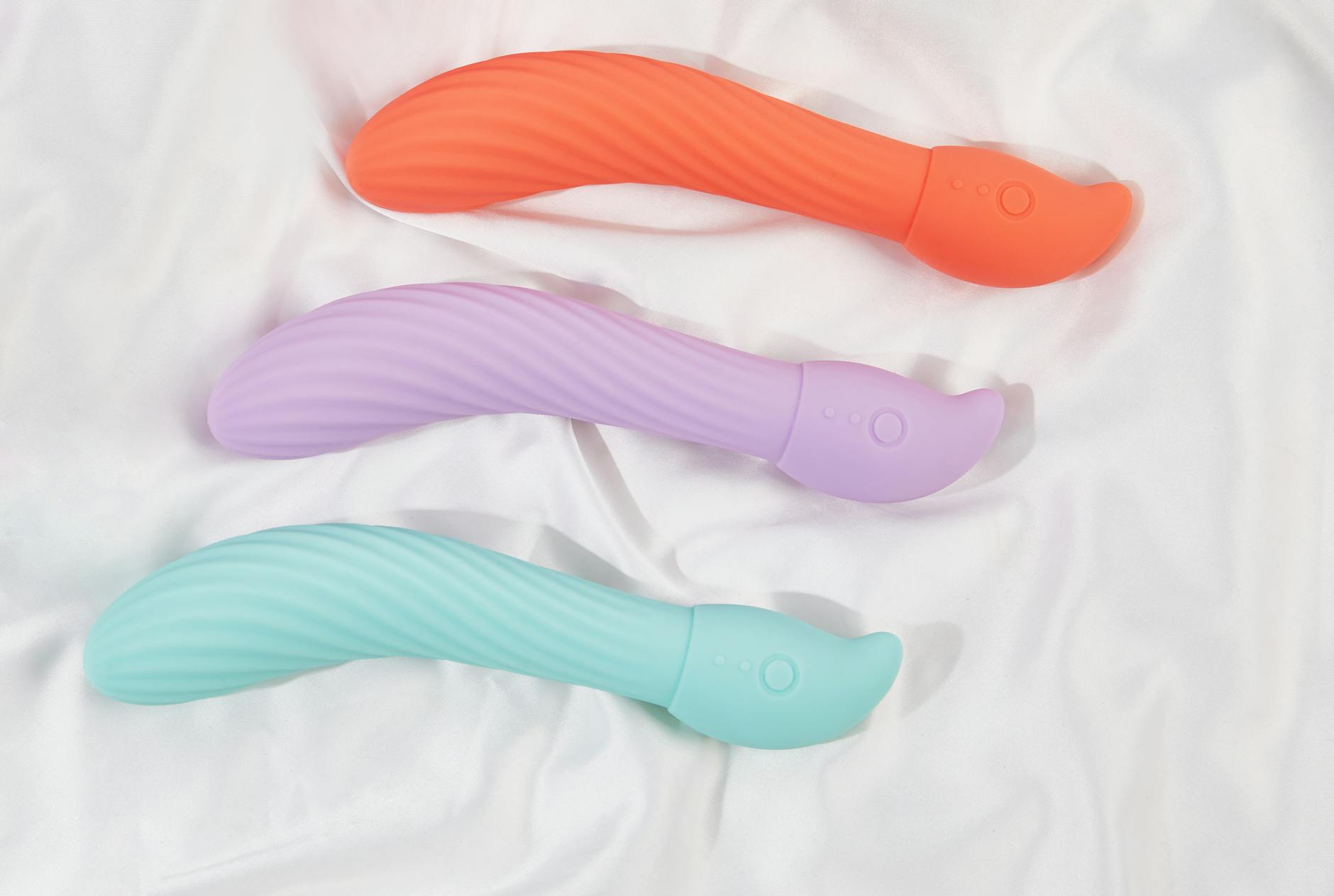
Photo by IFONNX Toys on Pexels
FAQ: Lemon vibrators for stressed couples
Can we use a lemon vibrator if one of us has completely lost interest in sex?
Yes, but it works differently. The person who's shutdown doesn't initiate. The interested partner invites them to be present while they use the lemon vibrator themselves. No pressure to participate, just permission to watch. Often, being around pleasure (rather than having to produce it) is what restarts desire. It takes 2 to 4 weeks of consistency, but it works.
How do we avoid the lemon vibrator feeling like "one more thing we're failing at"?
Stop calling it a date. Stop waiting for perfect conditions. Use it on a Tuesday at 7 p.m., both in sweatpants, right after dinner. The moment you make it formal, you give it space to feel like a task. Casual consistency beats rare romance when stress is high.
Is there a "best" lemon clitoral vibrator for couples who are new to vibrators?
The Lemon vibrator (often called the Lem) is purpose-built for couples because the sensation is precise without being overwhelming, and the settings are intuitive enough that you're not fumbling. Start on the lowest pattern and work up. Most couples find patterns 3 to 5 are the sweet spot for consistent response without numbing.
What if one partner is worried the lemon vibrator will make them seem inadequate?
This is worth naming directly. A lemon vibrator doesn't replace your partner. It supplements attention and touch. Lots of couples use them together specifically because it deepens what's already happening between them. Reframe it: "I want to explore pleasure with you more efficiently so we can stay connected." That's partnership, not replacement.
Can we use a lemon vibrator when one of us is dealing with depression or severe stress?
Depression and severe stress are different situations. If someone is in clinical depression, pleasure doesn't feel accessible, and forcing it creates shame. Check in with them first: "I want to stay connected. Would 15 minutes of touch and presence help right now, without pressure to perform?" Sometimes that's the beginning. The lemon vibrator comes later, if at all.
How do we keep the intimacy from feeling transactional when time is so limited?
Limitations don't kill intimacy. Resentment does. If both partners agreed to 15 minutes and both show up, it's an act of care, not a transaction. The transaction feeling comes when one person is always asking and the other is always resisting. Consistent, mutual 15-minute rituals are more intimate than rare, pressured two-hour sessions that breed resentment.
Stress will always come. What changes is whether your relationship shrinks around it or adapts. A lemon clitoral vibrator won't solve work chaos or mortgage anxiety. But it's a tool for keeping one part of your partnership alive while everything else is loud. That's not luxury. That's survival.